


"I Am Still the President" Maduro's Defiant Echo Amid the Iranian Conflict as Leaders Stand Against US Intimidation
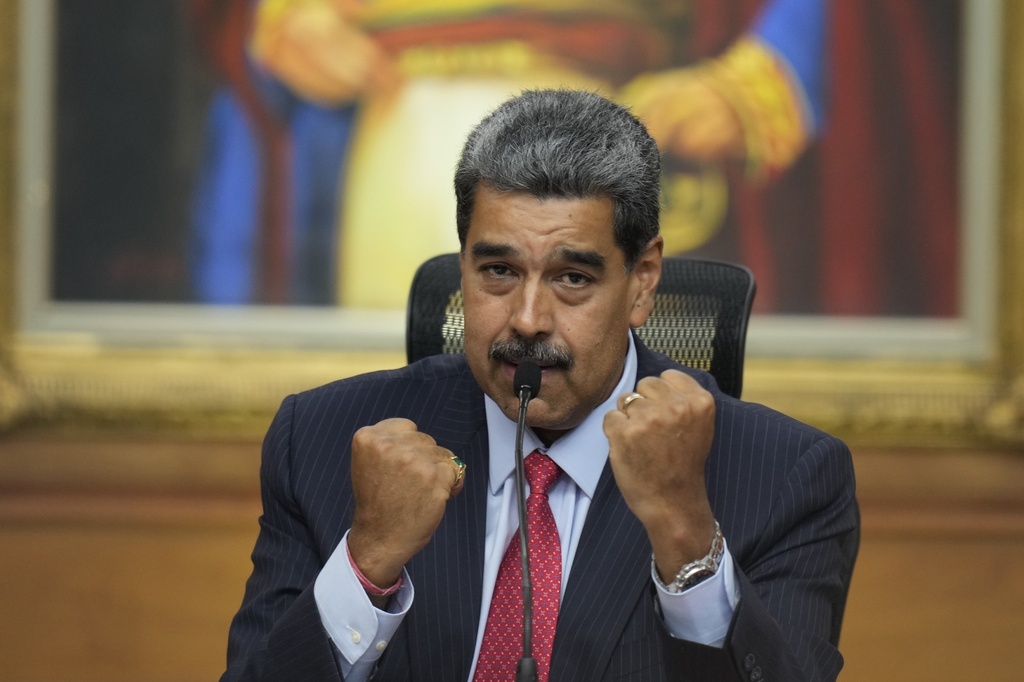 |
| Photo:AP |
Key Takeaway
From a Brooklyn detention cell, Nicolas Maduro continues to insist he is Venezuela's rightful president — a declaration that resonates strikingly with Iran's defiant refusal to yield to US-brokered peace terms. Together, these two fronts reveal a defining foreign policy pattern under President Donald Trump: the United States is willing to act alone, often without allied support, to forcibly reshape global geopolitics. As the Iran war intensifies, NATO fractures, and Tehran rejects Washington's 15-point peace plan as one-sided interference, the world watches a superpower test the limits of its own unilateralism — with consequences that are still far from certain.
Maduro's Defiant Declaration in the Shadow of the Iranian Conflict
 |
| Photo:Reuters |
In one of the most striking geopolitical moments of 2026, captured Venezuelan leader Nicolas Maduro, dressed in a blue prison uniform in a Manhattan federal courtroom, told a US district judge: "I'm innocent. I am not guilty. I am a decent man, the president of my country." His words — defiant, unshaken, and globally broadcast — carry an uncanny resonance with events unfolding thousands of miles away, where Iran's leadership continues to reject American peace overtures and insists it will not surrender to US intimidation. Both Maduro and Tehran's clerical regime are projecting one message to the world: the United States cannot simply decide who leads whom, and it will not go unanswered. These twin defiances are now at the center of a rapidly shifting US foreign policy doctrine — one defined by bold unilateral action, a fractured NATO alliance, and the looming question of whether Washington's Venezuela operation was a standalone mission or a dress rehearsal for a far larger confrontation with Iran.
The Capture and Charges Against Nicolas Maduro From Caracas to Brooklyn
 |
| Photo:Aljazeera |
In the early hours of January 3, 2026, US special forces launched a pre-dawn military operation in Caracas, Venezuela. Nicolas Maduro Moros was placed in US custody and subsequently transported to the Metropolitan Detention Center in Brooklyn, New York, where he is currently awaiting trial on federal charges including narco-terrorism and drug trafficking.
The legal basis for the operation stretches back years. An indictment filed in the US District Court for the Southern District of New York charges Maduro and five co-defendants with narco-terrorism conspiracy, cocaine importation conspiracy, and possession of and conspiracy to possess machine guns. The case, originally filed in March 2020, sets out what prosecutors characterize as state-sponsored drug trafficking at the highest levels of the Venezuelan government.
The charges against Maduro are not vague. The four-count indictment includes charges of cocaine trafficking and illegal weapons possession, revising an earlier superseding indictment unsealed in 2020. Sections of the indictment lay out a pattern of alleged crimes including facilitating drug trafficking, fostering and benefiting from drug-related corruption, and partnering with narco-terrorist groups across Latin America.
Critically, cooperating witnesses have already begun turning against Maduro. Hugo Carvajal Barrios, Venezuela's former military intelligence chief, pleaded guilty to narco-terrorism and drug trafficking charges in June 2025 following his extradition from Spain. Cliver Alcalá Cordones, a Venezuelan general, pleaded guilty in June 2023 to conspiring to provide material support to the FARC. Both are positioned to offer testimony against Maduro.
Despite the mountain of charges, Maduro has rejected them all. Deposed Venezuelan leader Maduro declared himself "innocent" and a "decent man" as he pleaded not guilty to federal drug trafficking charges in a US courtroom, saying: "I'm innocent. I am not guilty. I am a decent man, the president of my country." Even from custody, the Venezuelan government's position has not wavered. Although Maduro was de facto removed from power, according to the Venezuelan government and interim president Delcy Rodríguez, he is still the de jure president of Venezuela.
As for the legal timeline ahead, experts are tempering expectations. Legal experts say those complications mean Maduro likely won't go to trial this year, even as the case against him moves forward. Both legal experts who spoke to NPR noted that the two machine gun charges, which carry lengthy prison sentences, may push Maduro into at least considering a plea.
Citation note: The indictment is a charging document; all charges against Maduro remain allegations that have not been proven at trial. Maduro is presumed innocent under US law.
Trump as "Bringer of Peace" and Why That Has Unsettled the World
 |
| Photo:BBC News |
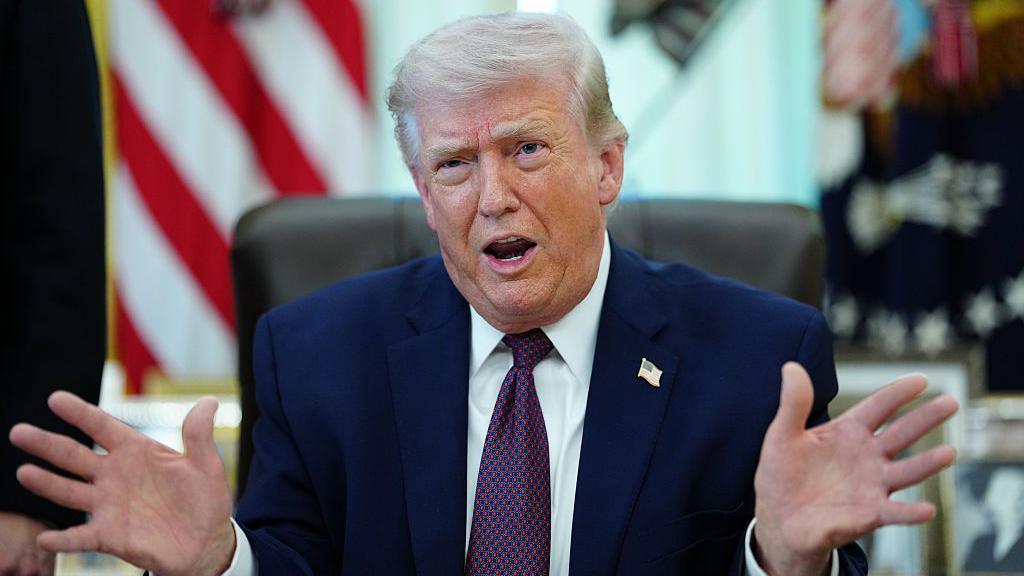
President Trump has been explicit about casting himself as a global peacemaker. Speaking at the National Republican Congressional Committee Annual Fundraising Dinner, Trump said his administration has already settled eight wars and argued the US is "winning" another in the Middle East.
But the version of "peace" Trump promotes has provoked deep unease among allies and rivals alike. The Venezuela operation itself was framed in openly imperial terms. President Trump described the US operation against Nicolas Maduro as an update of the Monroe Doctrine — the 1823 declaration by US President James Monroe that Latin America was closed to other powers. Mexico's President Claudia Sheinbaum pushed back immediately, saying: "The Americas do not belong to any doctrine or any power."
Trump's track record on peace deals is, at best, contested. Trump has made it well known that he is coveting the Nobel Peace Prize, and rarely passes up the opportunity to say he has solved eight conflicts around the world. But despite the efforts, the results have been mixed: some outcomes are precarious, and the president's role in brokering a deal is disputed. Others have simply unraveled.
On Iran specifically, his approach has been criticized for being self-contradictory. Trump's erratic approach to the war — making dire threats to obliterate Iranian power plants, then pulling back and proclaiming imminent potential breakthroughs — is typical of a political method that operates at the extremes. Yet his apparent leaning toward military force before dangling diplomacy also reflects a grim reality: the omens for a peace deal are poor.
Aaron David Miller, a former US Middle East peace negotiator, warned that the situation has crossed a threshold: "This war of choice that Trump waged has now become a war of necessity."
The international community has grown increasingly wary. Russia's UN Ambassador Nebenzya declared: "We cannot allow the United States to proclaim itself as some kind of a supreme judge, which alone bears the right to invade any country, to label culprits, to hand down and to enforce punishments irrespective of notions of international law, sovereignty and nonintervention." The UN Secretary-General also weighed in after the Venezuela operation, stating he remained "deeply concerned that rules of international law have not been respected."
Was Maduro's Capture a Trigger for the Iran War or Just a Warm-Up?
| Photo:BBC |
The ink had barely dried on Maduro's arrest warrant when analysts began drawing a direct line to Iran. Hours after the United States announced the capture of Venezuelan President Nicolas Maduro, Israeli politician Yair Lapid issued a warning to Tehran: "The regime in Iran should pay close attention to what is happening in Venezuela."
The strategic link between the two is not just rhetorical. Venezuela-Iran relations have strengthened in recent years: both countries are oil producers, both have struggled under a robust Western sanctions regime, and as Tehran upgraded its relationship with Caracas, its proxies such as Hezbollah established themselves inside Venezuela's borders — creating a strategic foothold in the Western Hemisphere.
Analysts were quick to note that Maduro's removal could accelerate the path to conflict with Iran. "A new lawlessness makes everything less stable and war more likely," said Jamal Abdi, president of the National Iranian American Council. "Whether Trump becomes enamoured with 'surgical' regime change, or gives Netanyahu a US imprimatur for similar actions, it's hard not to see how this gives momentum for the many actors pushing for renewed war with Iran."
The timeline that followed appeared to validate those warnings. On April 12, 2025, Iran and the United States began a series of negotiations aimed at reaching a nuclear peace agreement, following a letter from US President Donald Trump to Iranian Supreme Leader Ali Khamenei. Trump set a two-month deadline for Iran to reach an agreement. After the deadline passed without an agreement, Israel attacked Iran, igniting a war between the two countries.
By February 2026, the situation had escalated dramatically. On February 28, 2026, the United States and Israel began launching attacks against various targets in Iran, following weeks of negotiations over limiting Iran's nuclear program and the reach of its military. President Donald Trump referred to the campaign as "major combat operations."
The Venezuela playbook and the Iran campaign share a common thread: the Trump administration's willingness to use force where diplomacy stalls. US President Donald Trump has repeatedly touted the US operations in Venezuela as a "perfect" example of how regime change can play out, drawing direct parallels between Venezuela and Iran. However, the two theaters are vastly different in complexity, scale, and the nature of the regimes involved — a distinction that may prove consequential.
America Stands Alone, Major Allies Refuse to Join the Iran War
 |
| Photo:New York Times |
If Maduro's capture showed the US could act alone in the Western Hemisphere, the Iran war has demonstrated that America is increasingly prepared to act alone everywhere — even as the costs mount. US President Donald Trump's already fraught relationship with NATO allies is fraying further as the US-Israel war on Iran is in its second month. A growing number of partners are resisting Washington's requests for support in the conflict, deepening a transatlantic rift.
The specific refusals have been stunning in their breadth. Spain closed its airspace to US jets, and Italy denied US military aircraft bound for the Middle East permission to land at a base in Sicily. Poland said it has no plans to relocate its Patriot batteries, following a report that the US suggested Warsaw consider sending one of its systems to shore up air defenses in the Middle East.
France went further. Paris refused to allow planes "loaded up with military supplies" and "headed to Israel" to fly over French territory. Trump hit out at France, saying it was "VERY UNHELPFUL."
The United Kingdom, America's closest traditional ally, drew its own line. British Prime Minister Keir Starmer said: "This is not our war, and we're not going to get dragged into it."
The legal reasoning from European capitals has been consistent. "One key issue for European countries is the issue of legality," said Kamil Zwolski of the Royal United Services Institute. "What Europeans mean when they say that this war has no legal basis is that the United Nations has not approved it — there was no resolution. They also mean that this is not a war of self-defense, because there was no evidence of imminent attack of Iran against the US or Israel. At the minimum, what they also mean is that this war was not agreed by NATO allies. They were not consulted."
Trump's response has been characteristically defiant. In a Truth Social post, Trump said he was "not surprised" at NATO because he views it as a "one way street — We will protect them, but they will do nothing for us." He added: "Because of the fact that we have had such Military Success, we no longer 'need,' or desire, the NATO Countries' assistance — WE NEVER DID!"
He has even threatened to leave the alliance entirely. Trump is considering trying to pull the United States out of NATO over its members' unwillingness to join the Iran war, calling the alliance a "paper tiger" for refusing to help US forces reopen the Strait of Hormuz and saying that US membership is now "beyond reconsideration."
And yet — despite all allied refusals — the US military campaign has pressed on. The Trump administration said it is ahead of schedule in its war against Iran, touting sweeping battlefield gains and a crippled regime, with White House press secretary Karoline Leavitt stating: "Just over three weeks in, it's abundantly clear that Operation Epic Fury has been a resounding military triumph," with "more than 9,000 enemy targets struck to date."
This is consistent with a broader historical American posture. From Korea to Kosovo to Iraq, the United States has repeatedly chosen to absorb the reputational and diplomatic cost of going it alone rather than be constrained by the hesitation of allies. The Iran war represents perhaps the most dramatic iteration of that tradition in modern history.
Iran's Iron Defiance Rejecting Trump's Peace as One-Sided Interference
If there is a single thread connecting Maduro's courtroom declaration to Tehran's battlefield posture, it is the refusal to accept American-defined terms as legitimate. Iran has been unambiguous: it will not negotiate surrender.
The clearest expression of this came when the US delivered its much-publicized peace framework. US envoy Steve Witkoff confirmed presenting a "15-point action list that forms the framework for a peace deal," which mediator Pakistan gave to Iran. The plan included a one-month ceasefire, a handover of Iran's highly enriched uranium stockpiles, a halt to further enrichment, curbs on Tehran's ballistic missile programme, and an end to support for regional proxies.
Iran's response was categorical rejection. Iran's military command rejected the 15-point peace proposal from the US, saying it will not "come to terms" with Washington and laid out its own conditions. Iranian Foreign Minister Abbas Araghchi was even more direct: "No negotiations have happened with the enemy until now, and we do not plan on any negotiations."
Tehran's counteroffer revealed the depth of the gap. Iran's counterproposal calls for a halt to aggression and killings, concrete guarantees against recurrence, reparations, an end to hostilities against Iran's allies, and formal recognition of Iranian sovereignty over the Strait of Hormuz.
Iran's leadership has framed Trump's approach as interference masquerading as diplomacy. The state-affiliated Tasnim news agency insisted that the Strait of Hormuz would not return to pre-war levels of travel, and suggested that the negotiations were an effort to sow discord within Iran. A Khamenei advisor captured the sentiment succinctly: "He speaks of an olive branch, but we see only barbed wire."
The structural mismatch runs deeper than talking points. Iran's Islamic Revolutionary Guard Corps has ruled out talking, sending a clear message that the remaining leadership in Iran is prepared to fight rather than take instructions from Washington. Analysts say that whatever comes next in the already-escalating war with Iran is highly unpredictable. And Iran's theocratic, ideologically driven regime bears very little resemblance to the government built around former strongman Maduro.
One analyst at Control Risks offered a sobering forecast: "We are likely to see continued retaliation, continued escalation, and the conflict ending only as a consequence of the exhausted resources from one side or the other."
Trump, for his part, has offered his own reading of Iranian psychology. "They want to make a deal so badly, but they're afraid to say it because they figure they'll be killed by their own people," Trump told members of Congress. Iran has dismissed such framing entirely, with officials insisting the US is "negotiating with itself."
Key Outlook
The world in April 2026 is navigating an unprecedented convergence of crises, each illuminated by a common question: what happens when the world's most powerful nation acts without consensus — and its adversaries refuse to bend?
Nicolas Maduro's declaration that he remains Venezuela's president, even from a Brooklyn jail cell, is not merely a legal argument — it is a geopolitical statement. It reflects a pattern seen from Tehran to Caracas: authoritarian leaders who have calculated that symbolic defiance carries strategic value, especially when US actions are seen internationally as legally dubious.
Trump's broader "peace" agenda has produced real diplomatic outcomes in some theaters while generating new instability in others. In the Iran case, the US launched strikes while negotiations were ongoing, an act that shattered whatever trust had been built and made a genuine ceasefire structurally harder to achieve. NATO, the cornerstone of Western collective security for 76 years, is facing its most serious internal test, with Spain, France, Italy, Poland and the UK all refusing meaningful participation in the Iran campaign.
Yet the United States presses forward. America has a long, complicated history of acting without allied backing — and sometimes achieving its stated objectives regardless. Whether "Operation Epic Fury" produces a lasting strategic outcome, or deepens a spiral of regional instability, remains to be seen.
What is clear is this: the Maduro capture was not merely a law-enforcement operation. It was a signal — to Iran, to NATO, to the world — that the Trump administration views unilateral decisive action as both legitimate and effective. Iran has received that signal. Its response, so far, has been to close the Strait of Hormuz, reject 15-point peace plans, and declare it will not negotiate with "the enemy." The gears of this confrontation are turning — and they show no sign of slowing down.
This article draws on reporting and data from the US Department of State, PBS NewsHour, NPR, CNN, Al Jazeera, the Council on Foreign Relations, the Atlantic Council, Lawfare, JURIST Legal News, Bloomberg, Foreign Policy, SCOTUSblog, the House of Commons Library, and Euronews. All charges against Nicolas Maduro referenced herein remain allegations; he has pleaded not guilty and is presumed innocent under US law.
.png)


No comments:
Post a Comment