SPECIAL REPORT · TOKENOMICS FORENSICS
Why Web3 Games Die Despite
Billions Invested:
The Tokenomics Death Spiral
How investor-centric economic models guaranteed the collapse of 93% of
blockchain gaming projects — and what due diligence must change.
 |
| Image:NCFA Canada |
The pitch was irresistible. Billions of dollars poured into blockchain gaming between
2021 and 2022, underwritten by a simple conviction: that digital ownership would
transform the economics of play, turning players into stakeholders and games into
perpetual wealth machines. The promise — that blockchain would do for gaming what
Bitcoin did for money — attracted institutional capital, sovereign wealth allocators, and
retail speculators alike. The result was a graveyard.
Web3 gaming raised roughly $15 billion at the peak of the boom. More than 90% of
those projects subsequently failed — not as businesses occasionally fail, through bad
luck or poor execution, but as a predictable mathematical consequence of how they
were built. The collapse was not a hype cycle correcting. It was an engineered exit
liquidity mechanism reaching its terminal limit.
THE AUTOPSY REPORT
The Scale of the Collapse
The 93% failure rate — sourced from industry datasets including DappRadar and
analytics compiled by gaming-focused research teams — classifies a project as failed when it meets one or more of the following conditions: no meaningful daily active wallets
(fewer than 100), a token price collapse of 95% or more from all-time high, a shutdown
of operations, or an inability to retain any organic user base. Depending on the
methodology, the failure rate sits between 90% and 95%. For practical purposes, the
distinction does not matter. The sector is overwhelmingly dead
when it meets one or more of the following conditions: no meaningful daily active wallets
(fewer than 100), a token price collapse of 95% or more from all-time high, a shutdown
of operations, or an inability to retain any organic user base. Depending on the
methodology, the failure rate sits between 90% and 95%. For practical purposes, the
distinction does not matter. The sector is overwhelmingly dead
KEY DISTINCTION
Dead vs. Zombie Web3 Projects
Dead: Zero or near-zero daily transactions. No active player base. Abandoned community
channels. No meaningful development activity.
Zombie: Still maintained by speculators or treasury support. Token still trades. Some
nominal development continues. But there are no real organic players, no durable game
loop — just a tradable story.
Much of the sector's "active" project count is composed of zombies. The true mortality rate,
counting zombies as economically dead, is higher still.
The capital efficiency picture is equally damning. In a healthy gaming business, revenue
derives from purchases, subscriptions, cosmetics, expansions, and the long-term
engagement of retained players. In most Web3 games, what was labeled "revenue" was
in practice: token emissions, NFT sales to new entrants, and fresh investor capital. This
is not revenue in any meaningful sense. It is funding disguised as demand — a
distinction that vanished from investor analyses throughout the boom, and one that
explains why $15 billion in deployed capital produced almost no lasting economic value
for players.
THE INVESTOR-PLAYER CONFLICT
A System Built to Extract, Not Sustain
To understand why Web3 game economies failed, you must understand who they were
built for. The answer is not players. Token allocation schedules — the blueprints that
govern how a project's total token supply is distributed — reveal the actual hierarchy of
beneficiaries in almost every failed project.

The structural consequence of this allocation is immediate: insiders are positioned to
profit early, while players receive so little upside that they cannot function as genuine
long-term stakeholders. The people supposedly "playing" are in practice subsidizing
insiders' liquidity events. This is not a design flaw. It is the design.
These economies function — briefly — during what might be called the hyper
acquisition phase: the window during which new users are arriving quickly enough that
their capital inflow supports token prices for earlier entrants. New money buys tokens
and NFTs from earlier entrants. Token emissions reward participation. Asset prices
remain elevated as long as demand continues to grow. This is the only phase in which
the model produces the promised returns.
Once user acquisition slows, the arithmetic inverts. Token sellers begin to outnumber
buyers. Emissions continue, creating inflation without corresponding demand. Rewards
lose value. Player confidence erodes. This is the classic structure of new money
subsidizing old money — and its collapse is not mathematically avoidable.
"These aren't business failures. They are engineered exit-liquidity
mechanisms reaching their mathematical limits."
-STRUCTURAL ANALYSIS, WEB3 GAMING ECONOMICS
THE PONZINOMICS CURVE · COLLAPSE SEQUENCE
1. Launch with high reward expectations Token emissions attract early capital and speculative
users
2. User growth drives price appreciation New entrants subsidize earlier holders; token price
rises
3. Token emissions accelerate More rewards attract more players; supply expands rapidly
4. Sell pressure exceeds buy pressure Emitted tokens hit market faster than organic demand
grows
5. User growth stalls Acquisition costs rise; non-token appeal proves insufficient
6. Token price falls Player earnings shrink in real value; confidence erodes
7. Players exit Incentive to play disappears; remaining holders rush for liquidity
8. Collapse accelerates The economy cannot self-correct — perpetual inflows required
CASE STUDY · CANONICAL FAILURE:
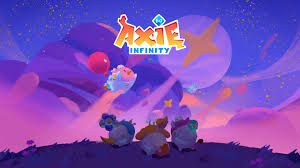
Axie Infinity and the SLP Hyperinflation
 |
| Image: Axie Infinity |
Axie Infinity became the most celebrated proof of concept for play-to-earn gaming and
subsequently the sector's most instructive failure. At its peak, the game's Ronin ecosystem
processed millions of daily transactions and was cited globally as evidence that GameFi
had achieved product-market fit.
The core reward mechanism was Smooth Love Potion (SLP), the token players earned
through gameplay. As Axie's user base grew, SLP was emitted at an accelerating rate.
Supply expanded rapidly but demand — primarily driven by the need to breed new Axie
NFTs — did not grow at the same pace. The resulting hyperinflation was textbook: token
value collapsed, player earnings shrank in real terms, the incentive to play diminished, and
the user base declined precipitously.
What Axie demonstrated is not that blockchain gaming is unworkable, but that unchecked
token emission meeting stagnant user growth produces inevitable collapse regardless
of initial scale. The Ronin bridge hack of 2022 accelerated the deterioration, but the
economic spiral had begun before the exploit.
How the Supply Schedule Guaranteed Decline
THE VESTING SCHEDULE WEAPON
Token unlock schedules translate abstract supply overhangs into concrete, predictable
market events. Two mechanisms dominate the damage: cliff periods and linear vesting.
A cliff period is a lockup followed by a large batch unlock — a sudden injection of supply
into the market, often anticipated by traders in advance. The anticipation itself creates
selling pressure before the unlock arrives. The unlock confirms it. In projects with weak
organic demand, this sequence produces a price decline that is not a surprise to anyone
with access to the vesting schedule. It is a pre-announced event.
Linear vesting releases tokens gradually rather than in batches, but the market still
prices in the continuous supply increase. If the project lacks genuine user demand,
each tranche of released tokens adds to the effective sell pressure without a
corresponding increase in buy-side interest.
The deeper problem is the misaligned incentive structure of early investors. Private
round participants typically have IRR targets and exit timelines calibrated to 18 to 24
months, not the five to seven years required to build a sustainable game. This creates a
structural incentive to maximize token price at launch — through marketing campaigns,
influencer partnerships, and hype cycles — and exit at the earliest opportunity. The
interests of an investor seeking LP return metrics at the 18-month mark are
fundamentally incompatible with the interests of a studio attempting to build a decade
long franchise.

A high Fully Diluted Valuation at launch compounds this dynamic. FDV prices the
project as though all future tokens — including those not yet in circulation — already
carry value. When supply is mostly locked but FDV is large, future unlocks become a
known overhang. Long-term price appreciation becomes structurally difficult to justify.
Every rally is treated as an exit opportunity by holders who understand the supply
schedule.
STRUCTURAL WARNING · HIGH FDV AT LAUNCH
A token with a high FDV and a front-loaded vesting schedule is not an asset with upside. It
is a pre-announced dilution event. Projects that launched in 2021-2022 with FDVs of
$500M-$2B+ on minimal real player bases created price ceilings that could only be
sustained by perpetual speculative inflows — inflows that, by definition, would eventually
stop.
What Resilience Actually Looks Like
THE SURVIVORS' PARADOX
Gods Unchained
More game-first than most competitors. A clear trading card gameplay loop that
functions independently of token speculation. Blockchain serves as ownership
infrastructure for cards, not the reason to play. The game's existence does not depend
on its token's price.
Sorare
Fantasy sports and digital collectibles align naturally with user behavior patterns that
predate crypto. The blockchain layer is primarily infrastructure for asset ownership and
tradability, not a yield mechanism. The product has a clear value proposition for non
crypto-native users — a rare distinction in the sector.
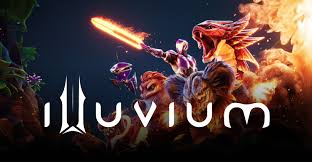
Illuvium
 |
| Image:Illuvium.io |
More asset-heavy and production-driven. Attempts to deliver a traditional game
experience with ownership layered on top, rather than building speculation into the core
loop. Still faces sector headwinds, but the design philosophy is closer to a game than a
financial instrument.
The shared characteristics of resilient projects: lower initial token float, asset-centric
rather than currency-centric economies, and gameplay-first development with delayed
or decoupled token launches. In each case, the blockchain layer is subordinate to the
game. It provides verifiable ownership and secondary market liquidity. It is not the
reason players log in.
CRITICAL DISTINCTION · THE ARCHITECTURE OF SURVIVAL
Sustainable models treat blockchain as a backend ownership layer, not as
the primary gameplay loop.
Players want, in order: fun, progression, competition and social value, and optionally —
ownership. Failed Web3 games inverted this hierarchy, placing token rewards and
speculation ahead of gameplay. The projects that survived understood that blockchain is
infrastructure, not product.
Red Flags for Capital Deployment
DUE DILIGENCE FRAMEWORK
DUE DILIGENCE CHECKLIST — THE NEW WEB3 GAMING STANDARD
- Is there a fun game without token incentives? If removing the economic layer
removes the player base, the project is a security disguised as a game. The "Fun
Test" is non-negotiable.
- What are the 30/90/180-day retention rates? Token rewards inflate early
retention figures. Organic retention — measured after rewards decay — is the
only meaningful signal.
- What is actual in-game revenue per active user (ARPDAU)? Exclude token
emissions and NFT primary sales. Real revenue only.
- What percentage of token supply goes to private rounds vs. ecosystem
rewards? Danger zone: more than 30% to private investors. Any allocation
under 15% to actual players is extractive by design.
- Can the economy survive if token emissions are cut by 80%? If the answer
is no, the game does not have a sustainable economy. It has a subsidized one.
- Are investor lock-ups aligned with game lifecycle realities? A 12 to 18
month lock does not align investor incentives with the 4 to 6 years required to
build a franchise. Demand 3-year minimum locks with milestone-based vesting.
- What is the token emission rate vs. player burn mechanisms? At steady
state, the economy must be deflationary or neutral. Any project unable to
demonstrate a credible path to emission-burn balance is structurally
unsustainable.

The Bottom Line
Web3 gaming did not fail because blockchain technology is unsuited to games. It failed
because the overwhelming majority of projects built investor-first economies on top
of weak gameplay, then required perpetual user growth to sustain token prices. When
growth slowed — as it always does — the model collapsed into a death spiral of
emissions, sell pressure, falling rewards, and user flight. The $15 billion deployed
represents the cost of learning this lesson at scale.
The sector is now moving toward what practitioners call "Web 2.5": off-chain gameplay
with on-chain asset ownership, player-owned infrastructure, and token mechanics that
are additive rather than foundational. This is the correct direction. But the pivot will be
credible only if the capital structures change alongside the design philosophy.
The next $15 billion will die the same way unless limited partners begin demanding
vesting schedules aligned with game lifecycle realities — four to six year locks, not
eighteen months — and insisting that gameplay be demonstrably enjoyable before any
token is issued. Stop funding tokenomics whitepapers. Start funding game, designers.
This article constitutes market analysis and editorial commentary only. It does not constitute investment advice, legal
advice, or a recommendation to buy or sell any financial instrument or token. References to "ponzi-nomics" and
similar terminology describe observed economic dynamics and structural characteristics, not legal determinations. All
statistics cited reflect industry reporting from DappRadar, Caladan, and related research. Readers should conduct
independent due diligence before making investment decisions.





.png)



No comments:
Post a Comment